The Event
A Region’s Industry Fades
By the late 1960s, anthracite coal mining had all but disappeared from northeastern Pennsylvania. The Knox Mine Disaster of 1959 had flooded miles of underground workings and killed 12 miners, effectively ending deep mining in the northern anthracite field. Strip mining continued in scattered locations, leaving scarred landscapes across Lackawanna, Luzerne, and Schuylkill counties.
The physical evidence of a century of coal extraction was disappearing. Breakers were demolished, patch towns emptied, and the mining equipment that had powered the region’s economy rusted in abandoned collieries. A way of life that had drawn millions of immigrants to Pennsylvania was fading from memory.
A Movie Saves a Town
The preservation movement began unexpectedly with a Hollywood production. In 1968, Paramount Pictures chose the coal patch town of Eckley in Luzerne County as the primary filming location for “The Molly Maguires,” a drama starring Sean Connery and Richard Harris about Irish immigrant miners and labor conflict.
To transform Eckley into its 19th-century appearance, Paramount built a two-thirds scale wooden coal breaker, buried telephone lines, covered electric meters, and re-clad houses with period-appropriate wood siding. The production employed local residents as extras and crew. Principal photography began May 6, 1968.
The film premiered in January 1970 to modest box office returns, grossing only $2 million against an $11 million budget. But its impact on Eckley proved far greater than ticket sales suggested. On April 8, 1970, Paramount transferred ownership of the restored town to the Commonwealth of Pennsylvania for a token payment of one dollar.
The Museum Complex Takes Shape
In 1971, the Pennsylvania Historical and Museum Commission formalized a statewide approach to preserving the anthracite region’s heritage. The commission created the Anthracite Museum Complex, linking four sites across the coal region under unified administration.
The complex comprised the Pennsylvania Anthracite Heritage Museum and Scranton Iron Furnaces in Lackawanna County, Eckley Miners’ Village near Weatherly in Luzerne County, and the Museum of Anthracite Mining overlooking Ashland in Schuylkill County. Together, the four sites would interpret different aspects of the region’s industrial and cultural history.
The Scranton Iron Furnaces, built between 1848 and 1857 for the Lackawanna Iron and Coal Company, represented the earliest industrial development in the Lackawanna Valley. The four stone blast furnace stacks had produced iron using anthracite fuel, demonstrating the connection between coal extraction and manufacturing that shaped the region.
Building on Reclaimed Land
The main museum building required a location. Congressman Joseph M. McDade, an 18-term Republican representing northeastern Pennsylvania, secured $2 million in federal funding for the Bureau of Mines to reclaim the Old Continental strip mine in Scranton’s Keyser Valley.
The reclamation project transformed 180 acres of mining scars into recreational parkland. The park was dedicated in 1975, providing a site for the new museum adjacent to the Lackawanna Coal Mine Tour, which offered underground visits to the Clark Vein 300 feet below ground.
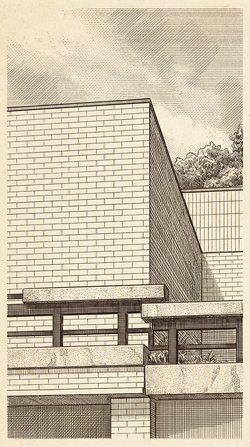
The Pennsylvania Anthracite Heritage Museum building opened to the public in 1976. Its permanent exhibition, “Anthracite People,” documented the successive waves of European immigration that populated the coal region from the 19th century forward. Visitors encountered full-scale replicas of a miner’s home, a neighborhood saloon, and religious spaces that anchored immigrant community life.
On July 30, 1977, the park was formally named the Joseph M. McDade Recreational Park in honor of the congressman whose efforts had made the reclamation possible.
What the Museums Preserve
Each site in the complex addresses different aspects of regional history. The Anthracite Heritage Museum focuses on the social history of immigration and labor, with galleries devoted to mining technology, the textile industry that employed women and children, and the labor movement that arose in response to dangerous conditions.
Eckley Miners’ Village preserves an authentic 1854 coal patch town, the only anthracite company town where the original town plan remains largely intact. The mile-long site encompasses 200 buildings, including miners’ houses, churches, a doctor’s office, and a company store.
The Scranton Iron Furnaces document the pre-coal industrial era, when the Scranton brothers’ ironworks transformed a five-house hamlet into an industrial city. The site hosts annual events including Arts on Fire, an industrial arts festival featuring working iron pours.
The Museum of Anthracite Mining in Ashland focuses on the technology and geology of coal extraction, with equipment displays and explanations of mining methods.
Fifty Years Later
The Anthracite Museum Complex has operated continuously since 1971, adapting its programming while maintaining its core mission. The Anthracite Heritage Museum added a bilingual exhibition, “We Are Anthracite: New Voices,” in 2015 to document contemporary Hispanic immigration and its parallels to earlier European settlement.
The museum reaches its 50th anniversary in 2026. The complex continues to be administered by the Pennsylvania Historical and Museum Commission, supported by the Anthracite Heritage Museum and Scranton Iron Furnaces Associates, a nonprofit organization that supplements state appropriations through fundraising and special events.
What began with a Hollywood movie and a one-dollar land transfer became a permanent institutional commitment to preserving the region’s working-class heritage. The coal is gone, but the stories of those who mined it remain.
Timeline of Events
1969
Paramount Pictures films 'The Molly Maguires' at Eckley, restoring the coal patch town
1970-04-08
Paramount transfers Eckley to Commonwealth of Pennsylvania for $1
1971
PHMC creates Anthracite Museum Complex linking four heritage sites
1975
McDade Park dedicated on reclaimed strip mine land; Eckley visitor center opens
1976
Pennsylvania Anthracite Heritage Museum building opens to the public
1977-07-30
Park formally named Joseph M. McDade Recreational Park
1991
Scranton Iron Furnaces added to National Register of Historic Places
2026
Museum celebrates 50th anniversary
Sources & Further Reading
- Pennsylvania Anthracite Heritage Museum , Wikipedia
- Pennsylvania Anthracite Heritage Museum , Pennsylvania Historical and Museum Commission
- Coal Patch, Take Two: The Preservation of Eckley Miners' Village , Pennsylvania Heritage Magazine
- McDade Park in Scranton celebrates 40th anniversary , NEPA Scene (2017)
- Industrial Heritage Trail , Pennsylvania Historical and Museum Commission