The Event
First Light
On December 6, 1880, less than a year after Edison patented his improved electric light bulb, workers at Dickson Locomotive Works switched on Scranton’s first electric lights. The city that George W. and Selden Scranton had built from the hamlet of Slocum Hollow through iron, coal, and railroads now had a new technology to chase.
The Scranton family followed within weeks. On February 23, 1881, their steel mill installed electric lighting, and on October 21, 1882, the Dickson brothers wired the Dickson Works on Penn Avenue. These were private installations, factory owners illuminating their own shops, but they signaled something larger. Before electricity arrived, Scranton’s streets relied on a couple hundred acetylene gas lamps. Arthur Frothingham, a New York-born theater owner, began pushing the city to replace those dim gas fixtures with electric arc lamps for the streets.
In the summer of 1883, the Scranton Select Council passed an ordinance incorporating the Peoples Electric Light and Power Co., giving Scranton its first public electric utility. W.W. Scranton, head of the Scranton Gas & Water Company, built the city’s first electric power plant along the Lackawanna River.
The Streetcar Breakthrough
Industrial lighting was one thing. Moving people was another. On July 6, 1886, E.B. Sturges, president of the newly formed Scranton Suburban Railway Company, broke ground on a line running from Wyoming Avenue through downtown to Green Ridge. Colonel George Sanderson served as secretary, and C.E. Flynn handled the electrical installation. The company contracted with the Van DePoele Electric Manufacturing Company for the electrical apparatus. The cars themselves were Pullman-built.
Construction finished in Green Ridge by November 1886. The cars themselves were compact: sixteen feet long, deep maroon, with incandescent electric lamps and an enclosed front platform where the driver controlled the motor by crank. Each car seated twenty-six passengers, thirteen to a side. A sixty-horsepower generator provided the power.
On November 29, 1886, Van DePoele himself arrived to conduct the trial run aboard Car #4. The trolley covered five blocks, from the intersection of Franklin and Lackawanna to Adams and Spruce, in four and a half minutes before motor problems cut the trip short. The next day, November 30, the maiden passenger run proceeded without incident. Scranton’s electric streetcar carried its first paying riders along a route from the Academy of Music on Wyoming Avenue, up Spruce Street past the courthouse, onto Adams Avenue, and up a steep hill into Green Ridge.
The fare was five cents. Horse-drawn trolleys charged twenty-five cents. The cars ran from seven in the morning until midnight, with service every fifteen minutes. Passengers on that inaugural evening were headed to hear Henry M. Stanley lecture at the Academy of Music. The power company charged the railway nine dollars per day.
First in the Country
Scranton’s system was the first in the United States to run exclusively on electric power. Other cities had experimented with electricity for streetcars, but none had abandoned animal power entirely. Frank Sprague’s celebrated Richmond, Virginia system, often cited as the birth of the modern trolley, did not begin operation until February 2, 1888, more than a year later. Sprague’s innovations in trolley pole design for direct current pickup would prove more influential on the industry’s long-term development, but the precedent belonged to Scranton.
The system grew. What started as a single line to Green Ridge eventually expanded to 110 miles of track. In 1896, Scranton’s competing streetcar companies consolidated into the Scranton Railway Company. The Green Ridge line itself ran continuously for sixty-eight years, until the final trolley made its last trip on December 18, 1954. Cars capable of four to fifteen miles per hour had set it all in motion. On the maiden run, Car #4 reached twelve.
The Naming
The public spectacle that cemented electricity in the city’s identity came on April 25, 1887, when the Author’s Carnival opened as a week-long YMCA fundraiser. The event featured the first public demonstration of electric light in Scranton and was described by contemporaries as “the most brilliant social event of that generation.” Arc lamps, later replaced by incandescent bulbs, began appearing along Lackawanna Avenue, which earned its own nickname: the “Great White Way.”
Rev. David Spencer, D.D., pastor of Penn Avenue Baptist Church, looked at the trolley wires overhead and the lit storefronts below and declared Scranton “The Electric City.” The name stuck. A city built on iron and coal had found a third identity.
Powering the Valley
Behind the nickname stood a consolidation of electrical infrastructure that matched the earlier railroad mergers in ambition. By 1900, most of Scranton’s scattered power plants had been brought under the Scranton Electric Company, managed by Duncan T. Campbell. The company expanded its control throughout the Lackawanna Valley, eventually acquiring every operating company between Pittston and Forest City. Only the municipal plant in Olyphant remained independent.
Scranton Electric Company was later acquired by American Gas & Electric Company. By the 1920s, electricity had reached homes across the valley. Coal, the fuel that had defined the region since the 1840s, now powered the generators that lit the city bearing its industrial founders’ name.
The Sign
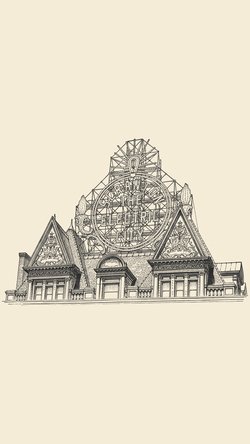
On Christmas Eve 1909, a “Watch Scranton Grow” illuminated sign appeared atop the Board of Trade Building at 507 Linden Street, a gift from Scranton Electric Company. The sign featured what observers called a “fountain of lights.” In October 1916, the words were changed to “Scranton The Electric City,” making the nickname a permanent fixture of the downtown skyline. The sign remains one of the oldest original electric signs still in existence in the country.
Timeline of Events
1880-01
Edison patents improved electric light bulb
1880-12-06
Electric lights introduced at Dickson Locomotive Works, the first in Scranton
1881-02-23
Scranton family's steel mill installs electric lighting
1882-10-21
Dickson brothers install electricity at Dickson Works on Penn Avenue
1883
Scranton Select Council passes Peoples Electric Light and Power Co. ordinance
1886-07-06
Construction begins on Scranton Suburban Railway
1886-11-29
Charles Van DePoele conducts trial run of Car #4; covers five blocks in 4.5 minutes before motor problems halt the trip
1886-11-30
Maiden passenger run on Scranton Suburban Railway, first commercial all-electric streetcar service in the United States
1887-04-25
Author's Carnival at YMCA: first public electric light demonstration, described as 'the most brilliant social event of that generation'
1900
Most power plants consolidated under Scranton Electric Company
1909-12-24
'Watch Scranton Grow' illuminated sign installed atop Board of Trade Building, a gift from Scranton Electric Company
1916-10
Sign replaced with 'Scranton The Electric City'
Sources & Further Reading
- The Electric City , Scranton History (2025)
- Electric Trolleys , Scranton History (2025)
- Saving for the Future: Historic Scranton Electric Building to Be New Fidelity Bank Headquarters , WVIA News (2025)
- Scranton, Pennsylvania , Wikipedia (2025)
- Scranton Suburban Railway Car No. 4 , ExplorePAHistory (2025)
- Streetcars in North America , Wikipedia (2025)
- Electric City Trolley Museum Association , ECTMA (2025)
- Electric City Turns 159 , Fox 56 (2024)