Origins
The Pennsylvania Historical and Museum Commission created the Anthracite Museum Complex in 1971 to preserve and interpret the region’s coal mining heritage. The complex linked four sites across the anthracite region: the Pennsylvania Anthracite Heritage Museum and Scranton Iron Furnaces in Lackawanna County, Eckley Miners’ Village near Weatherly in Luzerne County, and the Museum of Anthracite Mining in Ashland, Schuylkill County.
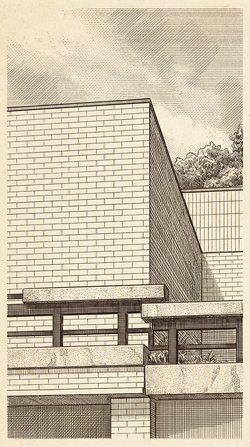
The Heritage Museum building opened to the public in 1976 within McDade Park. The park itself had been dedicated the previous year on land reclaimed from the Old Continental strip mine, a project championed by Congressman Joseph M. McDade. The location placed the museum adjacent to the Lackawanna Coal Mine Tour, creating a cluster of industrial heritage attractions on the site of a former working mine.
The Anthracite People Exhibition
The permanent exhibition, “Anthracite People: Immigration & Ethnicity in Pennsylvania’s Hard Coal Region,” forms the core of the museum experience. The exhibit traces the region’s settlement from Paleo-Indian inhabitants through successive waves of European immigration in the 19th and early 20th centuries.
Visitors encounter full-scale replicas of a miner’s home furnished with period items, a neighborhood saloon, and religious spaces that anchored immigrant community life. The recreated domestic settings show how families lived on meager wages in company towns, stretching resources through gardens, boarders, and home production.
Major sections cover life and work in the region’s two dominant industries: anthracite mining and textiles. Artifacts include Native American implements from the Lackawanna and Wyoming Valleys, mining tools ranging from primitive hand implements to mechanized drilling equipment, and silk machinery from the once-booming Scranton textile mills.
Mining Technology and Labor
The Mining Technology and Labor section displays an array of equipment documenting the evolution of extraction methods. Visitors see hand tools used in early room-and-pillar operations, pneumatic drills that increased productivity and lung disease alike, and battery-powered locomotives that hauled coal cars through underground passages.
The exhibit addresses the labor movement that arose in response to hazardous working conditions and exploitative wages. Interpretive panels cover figures like John Mitchell, the young president of the United Mine Workers who led the 1900 and 1902 anthracite strikes. One display reproduces his rallying cry: “The coal you dig isn’t Slavish or Polish, or Irish coal. It’s just coal.”
The museum also documents the Lattimer Massacre of September 10, 1897, when a Luzerne County sheriff’s posse killed at least 19 unarmed striking miners, most of Polish, Slovak, Lithuanian, and German origin. The killings sparked a surge of 10,000 new members into the United Mine Workers.
The Knox Mine Disaster
A dedicated section covers the Knox Mine Disaster of January 22, 1959. That morning, the Susquehanna River broke through a thin rock ceiling into the River Slope workings of the Knox Coal Company near Port Griffith. Twelve miners died. The flooding destroyed miles of interconnected underground workings and effectively ended large-scale deep mining in the northern anthracite field.
The museum hosts an annual Knox Mine Disaster Commemoration each January as part of Anthracite Mining Heritage Month. The 2026 commemoration included scholarly presentations on the disaster’s 50th anniversary documentation and the museum’s own half-century of preserving regional memory.
Silk and Textile Industry
A large gallery devoted to the textile industry documents the parallel economy that employed women and children while men worked underground. Scranton became a center of silk and lace production, with mills recruiting workers from immigrant families who needed additional household income.
Until child labor laws barred workers under sixteen in 1913, girls as young as twelve comprised the bulk of silk mill employees. At the industry’s peak, as many as 5,000 young girls worked in the coal region’s silk mills. The museum displays full-size looms, silk-making machinery, and a Nottingham lace loom from the Scranton Lace Company.
We Are Anthracite
“We Are Anthracite: New Voices” extends the immigration narrative to contemporary arrivals. Presented in both English and Spanish, the exhibit draws parallels between current Hispanic immigration and the earlier waves from Ireland and Eastern Europe. The bilingual format reflects the region’s changing demographics, particularly in cities like Hazleton.
The exhibit was designed in spring 2015 by graphic design students at Marywood University. It highlights how new immigrants continue creating communities in the anthracite region, adding their experiences to the ongoing story the museum documents.
The Iron Furnaces
The museum administers the Scranton Iron Furnaces, a four-acre site along Roaring Brook about three miles from the main building. The stone furnace stacks, built in the 1840s, represent the earliest industrial development in Scranton and employed many of the first immigrants to the area.
The furnaces serve as the venue for Arts on Fire, the museum’s annual industrial arts festival launched in 2010. Held the first weekend of June, the event features a working iron pour where visitors can purchase scratch block molds, watch metalsmiths cast original designs, and take home one-of-a-kind souvenirs of Scranton’s industrial heritage.
Support Organization
The Anthracite Heritage Museum and Scranton Iron Furnaces Associates, a 501(c)(3) nonprofit incorporated under EIN 25-1425089, provides community support for the museum’s educational mission. The organization raises funds through an annual appeal, memorial gifts, and special events, supplementing state appropriations to the Pennsylvania Historical and Museum Commission.
Visiting
The museum is located at 22 Bald Mountain Road in McDade Park, straddling the Scranton-Taylor border. Hours are Thursday through Sunday, 10 a.m. to 4 p.m., March through December. The museum closes January and February. Admission is $7 for adults, $6 for seniors 65 and older, and $5 for children ages 3-11. Active military and immediate family enter free.
The adjacent Lackawanna Coal Mine Tour, operated by Lackawanna County, offers underground mine visits by mine car 300 feet below ground. The tour follows a half-mile walking route through the Clark Vein, led by former miners or their children. The mine maintains a constant 53 degrees year-round.
Sources & Further Reading
- Pennsylvania Anthracite Heritage Museum, Pennsylvania Historical and Museum Commission
- Pennsylvania Anthracite Heritage Museum - Industrial Heritage Trail, Commonwealth of Pennsylvania
- If Looms Could Speak: The Story of Pennsylvania's Silk Industry, Pennsylvania Heritage Magazine
- PA Anthracite Heritage Museum & Iron Furnaces Associates Inc., Charity Navigator
- Anthracite Mining Heritage Month events announced, Wilkes-Barre Citizens' Voice (2026)