History
The District
The Lackawanna Avenue Commercial Historic District, formally listed on the National Register of Historic Places on November 10, 1983, covers a three-and-a-half block section of Lackawanna Avenue plus one square block to the northeast. Nancy Bisignani and Paul Doutrich prepared the registration in August 1983. The district spans 18.5 acres and contains 69 contributing buildings, roughly bounded by Adams, Franklin, Bogart Place, and Spruce Streets. Spruce Street was renamed Biden Street in 2021. Railroad tracks border the district on its north, west, and south sides.
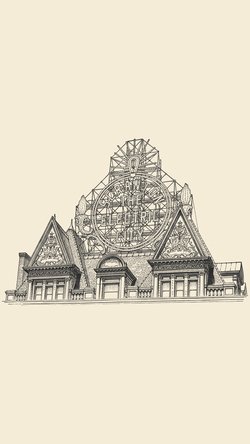
The period of significance begins in 1860, when the iron and coal industries were already reshaping the valley. Along the main stretch of Lackawanna Avenue, buildings typically rise three to four stories and span three to five bays, clad in brick, stone, tile, or stucco. Upper floors display Renaissance Revival, Romanesque Revival, and Commercial styles, while the older and smaller structures lean Italianate and Gothic Revival. Projecting cornices with brackets, pedimented parapets inscribed with dates and initials, and corbelled blind arcading give the streetscape a layered feel that reflects decades of construction and renovation.
The buildings along Wyoming Avenue and North Washington Avenue are taller and grander – four to eight stories, up to eight bays wide, in Renaissance Revival, Richardson Romanesque, Neo-Classical, and Art Deco.
Coal Money and County Seat
Scranton’s population grew from 35,000 in 1870 to nearly 150,000 by 1930, and the downtown built itself to match. When Lackawanna County was carved from Luzerne County on August 21, 1878 – making it Pennsylvania’s youngest county – Lackawanna Avenue became the administrative and commercial center of the new jurisdiction. Many of the district’s buildings went up in the last two decades of the 19th century, as two- and three-story retail structures lined the avenue and taller bank and office buildings dotted the corridor between them.
The Dime Bank Building, at the corner of Wyoming Avenue and what was then Spruce Street, was constructed in 1890-1891 in the Richardsonian Romanesque style. It began as a three-story, 70-by-70-foot structure before two stories were added shortly after, with a concrete wing following in 1908. The building was listed on the National Register in 1978. Nearby, the Lackawanna County Courthouse at 200 North Washington Avenue went up in 1884 as a Romanesque Revival structure. It was enlarged in 1896 with a third story, and a five-story clock tower gave it a commanding presence on the block. The courthouse hosted the first session of the 1902 Anthracite Coal Strike Commission, and the John Mitchell Monument was erected on its grounds in 1924. It received its own National Register listing in 1997.
The Electric City
Downtown Scranton’s identity was transformed by electricity in the 1880s. The Dickson Locomotive Works installed electric lights on December 6, 1880, and the Scranton family’s steel mill followed on February 23, 1881. Peoples Electric Light and Power Company secured an ordinance in the summer of 1883 to extend service further. E.B. Sturges introduced electric streetcars in 1886 – the first system in the country to run exclusively on electric power, with stops along Lackawanna Avenue. The illuminated avenue became known as “the Great White Way.”
The Author’s Carnival, a YMCA fundraiser that opened April 25, 1887, gave the public its first close encounter with electric illumination as spectacle. Rev. David Spencer, pastor of Penn Avenue Baptist Church, coined the name “Electric City” for the newly lit-up town.
Landmarks Within the District
St. Luke’s Episcopal Church on Wyoming Avenue, built in 1871 and designed by Richard Upjohn and Richard Mitchell Upjohn, holds Tiffany stained glass windows. It was recently added to the National Register. The Municipal Building at Wyoming and Mulberry Streets dates to 1888 in the Victorian Gothic style and has been on the National Register since the 1980s. During its construction, workers relocated a house around newly installed electric streetlights rather than remove them.
The William J. Nealon Federal Courthouse at 235 North Washington Avenue was built between 1930 and 1931 at a cost of $1,004,000. Its Neoclassical and Art Deco exterior combines limestone, brick, and terracotta over a granite base, with green serpentine columns inside. It was dedicated October 19, 1931. The building underwent a $4.3 million rehabilitation in 1985, and Bohlin Cywinski Jackson designed a 1999 annex. That same year, the courthouse was renamed for Judge William J. Nealon, who had served as chief judge from 1976 to 1989.
The Globe Store on Wyoming Avenue opened in 1878, founded by John Cleland and John Simpson. At its peak it occupied five floors, including the Charl-Mont restaurant, and was famous for its Christmas decorations. The founding families ran the store until 1979, when it became a Wanamaker division. Private local ownership followed in 1989, but the store closed in 1994 after the Steamtown Mall opened the previous year. After sitting vacant for 23 years, the 250,000-square-foot building was acquired by Lackawanna County in the spring of 2016 and converted into a Government Center through a $17 million renovation. Roughly 700 county employees now work there.
The Scranton Cultural Center occupies a Masonic Temple and Scottish Rite Cathedral designed by Raymond Hood. The former DL&W Station operates as the Radisson Lackawanna Station Hotel. Alex Grass opened his Thrif D Discount Center on Lackawanna Avenue in 1962, a single store that grew into the Rite Aid chain.
Decline and Preservation
The Depression that began in 1929 hit downtown hard, and suburban mall development in the 1950s and 1960s accelerated the decline. Business leaders and the Chamber of Commerce created the Scranton Plan in 1945 to diversify the local economy beyond coal.
Since the mid-1980s, the city has focused on revitalizing the corridor. Loft-style apartments in renovated historic buildings have drawn younger residents back to the district. The City of Scranton established a Local Downtown Historic District by ordinance in 2019, layering local protections over the National Register listing. The city’s Historical Architectural Review Board, originally established in 1976 and expanded in 1996, 2005, 2015, and 2019, is a nine-member body that reviews exterior modifications to buildings within the district. Property owners must obtain a Certificate of Appropriateness before altering a facade. The city describes Scranton as having a “remarkably intact collection of historic buildings.”
Sources & Further Reading
- Lackawanna Avenue Commercial Historic District , Wikipedia (2024)
- Lackawanna Avenue Commercial Historic District , LivingPlaces.com (2024)
- National Register of Historic Places listings in Lackawanna County, Pennsylvania , Wikipedia (2024)
- Scranton, Pennsylvania , Wikipedia (2024)
- News Voices: Major Milestones for Two Historic Scranton Buildings , WVIA News (2025)
- Dime Bank Building , Wikipedia (2024)
- The Electric City , Scranton History (2024)
- Rediscover Scranton: History , DiscoverNEPA (2024)
- Lackawanna County Courthouse , Wikipedia (2024)
- William J. Nealon Courthouse, Scranton, PA , U.S. General Services Administration (2024)
- Globe Store , Wikipedia (2024)
- The Globe Store, Downtown Scranton , Keystone Edge (2017)
- Historic Preservation , City of Scranton (2024)
- Historical Architecture Review Board , City of Scranton (2024)