History
The Northern Anthracite Field
The anthracite coal beneath Scranton formed between 345 and 280 million years ago during the Carboniferous period. Dense swamps covered the region, and over millions of years, layer upon layer of dead vegetation accumulated, compressed, and transformed under heat and pressure into hard coal. The Northern Anthracite Field, the largest of Pennsylvania’s four coal regions, holds deposits with the highest carbon content and deepest seams in the state.
Before any coal could be extracted from the Lackawanna Valley, engineers faced a massive obstacle: water. The entire valley had to be drained to a depth of hundreds of feet before mining could begin. Once this was accomplished, companies sank shafts and drove slopes into the coal-rich earth.
Continental Coal Company
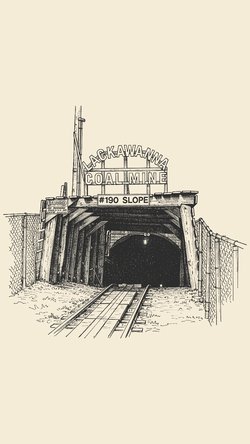
The Continental Coal Company opened the mine in 1860, tapping into the Clark Vein approximately 300 feet below the surface. The company drove the #190 Slope in 1903, creating the distinctive inclined entrance that visitors use today. Unlike vertical shaft mines that lower workers straight down, slope mines follow the angled coal seams into the earth.
The mine operated for over a century. At its peak, thousands of miners worked the anthracite seams beneath Scranton and neighboring communities, producing the hard coal that heated homes and powered industries across the Eastern United States. Immigration from Wales, Ireland, Poland, Italy, and other European countries supplied much of the workforce. These men spent their days in darkness, breathing coal dust, extracting a resource that built fortunes above ground.
The Last Deep Mine
By the mid-20th century, anthracite’s dominance had ended. Oil and natural gas replaced coal for home heating. The mines that had supported the region for generations began closing one by one.
The #190 Slope continued operating until 1966, when it became the last deep anthracite mine to cease operations in Lackawanna County. The closure marked the end of an era. Underground mining had defined the Lackawanna Valley for more than a century. Now the shafts and tunnels fell silent.
The mine sat abandoned for three years before Lackawanna County commissioned a study in 1969 to evaluate its potential as a tourist attraction. The feasibility study recommended restoration. In 1977, work began to stabilize the tunnels, install safety features, and adapt the mine for public tours.
Opening to the Public
The Lackawanna Coal Mine Tour welcomed its first visitors in 1985. Lackawanna County operates the attraction as part of the McDade Park complex, which also includes the Pennsylvania Anthracite Heritage Museum.
The tour begins at a visitor center where guests watch an introductory film about anthracite mining. Visitors then board a mine car at the top of the #190 Slope. The hoisting system lowers the car at a steep angle, making a full 90-degree turn partway down—a feature unique among American mine tours. The descent takes three to four minutes.
At the bottom, guides lead walking tours through approximately half a mile of tunnels. The temperature holds steady at 53 degrees Fahrenheit year-round, regardless of conditions on the surface. Light jackets are available for rent, and sturdy footwear is recommended for the wet, uneven floors.
The Tour Experience
Former miners or children of miners lead the tours, explaining the methods used to extract anthracite and the conditions workers endured. They demonstrate equipment, describe the dangers, and answer questions about daily life underground.
The Clark Vein contains an unusually rich deposit of coal formed from heavy accumulations of organic matter. Visitors can see the black seams in the tunnel walls, touch the coal, and examine the timber supports that hold back the rock overhead.
Tours run about an hour total, with 28 visitors per car. On busy days—particularly weekends and holidays during the summer season—the last spots may fill before the posted final tour time. The box office opens at 10 a.m. and closes after the 2:30 p.m. departure.
Recognition
USA Today has rated the Lackawanna Coal Mine Tour among America’s best underground attractions. The mine also gained pop culture attention through appearances in NBC’s The Office and the Amazon series The Man in the High Castle, which used the location as a portal to parallel worlds in its third and fourth seasons.
Visiting Today
The Lackawanna Coal Mine Tour operates from April 1 through November 30, Thursday through Monday. The site is closed on Tuesdays and Wednesdays except for pre-scheduled group tours. It also closes on Easter Sunday and Thanksgiving Day.
Admission is $12 for adults ages 13-64, $10 for seniors 65 and older and military, and $9 for children ages 3-12. Children under 3 enter free. Group rates are available for parties of 20 or more with advance reservations.
The mine is accessible to guests with disabilities with certain restrictions. Visitors must be able to transfer from a wheelchair to the mine car and have a companion to assist them through the tunnels. Personal wheelchairs and mobility devices cannot travel on the mine car or through the mine.
The site includes free parking, a gift shop, and a snack bar. Adjacent to the mine tour, the Pennsylvania Anthracite Heritage Museum offers exhibits on the region’s mining, industrial, and immigrant history.
The Lackawanna Coal Mine Tour operates at 1 Bald Mountain Road in McDade Park. Call (570) 963-6463 or toll-free 1-800-238-7245 for tour schedules and reservations.
Sources & Further Reading
- Lackawanna Coal Mine Tour , Lackawanna County Parks and Recreation (2026)
- Lackawanna Coal Mine Tour Official Site , Lackawanna County (2026)
- Lackawanna Coal Mine Tour , Wikipedia (2026)
- The Slope 190 Story Historical Marker , Historical Marker Database (2026)
- Visit | Pennsylvania Anthracite Heritage Museum , Pennsylvania Anthracite Heritage Museum (2026)